
New York Bankruptcy Records
New York bankruptcy records are filed in federal court, not state court. The state has four U.S. Bankruptcy Court districts that cover all 62 counties. You can search for case filings, docket sheets, and discharge orders through the PACER system or by visiting a courthouse in person. Each district keeps its own case files at clerk offices in Manhattan, Brooklyn, Central Islip, Albany, Syracuse, Utica, Buffalo, and Rochester. Free basic case data is also on hand through the Voice Case Information System at 866-222-8029. This page walks you through how to find and get copies of New York bankruptcy records no matter where in the state the case was filed.
New York Bankruptcy Records Overview
Where to Find New York Bankruptcy Records
Bankruptcy is a federal matter. State courts do not handle these cases. In New York, all bankruptcy filings go through one of four U.S. Bankruptcy Court districts. The Southern District of New York covers Manhattan, the Bronx, Westchester, Dutchess, Orange, Putnam, Rockland, and Sullivan counties. It has courthouses in Manhattan at One Bowling Green, in White Plains at 300 Quarropas Street, and in Poughkeepsie at 355 Main Street. The Southern District is one of the busiest bankruptcy courts in the country.
The Eastern District serves Brooklyn, Queens, Staten Island, Nassau, and Suffolk counties. Its main courthouse sits at 271-C Cadman Plaza East in Brooklyn. A second office is at 290 Federal Plaza in Central Islip. Cases from Long Island typically go through Central Islip. Brooklyn handles the rest.
Upstate New York splits between two more districts. The Northern District covers 32 counties from Albany to the Canadian border, with offices in Albany at 445 Broadway, Syracuse at 100 South Clinton Street, and Utica at 10 Broad Street. The Western District handles 17 counties in the western part of the state from its Buffalo office at 2 Niagara Square and Rochester office at 100 State Street.
Note: Your county determines which district handles your case. Check the county pages on this site to find out which federal district covers your area.
How to Search Bankruptcy Records in New York
PACER is the main tool for searching New York bankruptcy records online. It stands for Public Access to Court Electronic Records. Anyone can sign up for a free account. You search by party name, case number, Social Security number, or tax ID. PACER shows docket sheets, filed documents, and case status for bankruptcy cases across all four New York districts. The fee is $0.10 per page, capped at $3.00 per document. If your charges stay under $30 in a quarter, they get waived.
The PACER Case Locator at pcl.uscourts.gov lets you run a nationwide search. This helps when you are not sure which district handled a case. It pulls results from every federal court. Once you find the case, you can go to that specific court's PACER site for full documents. Written opinions that judges mark for public release are free to view and download on PACER.
Each courthouse also has public access terminals. You can walk in during business hours and look up cases at no cost. The terminals show the same data as PACER. Staff at the Clerk's Office can help you find what you need. Hours run from 8:00 AM to 4:30 PM on weekdays at most locations.
For quick case status checks, call the Voice Case Information System (VCIS) at 866-222-8029. It is free and runs 24 hours a day. You can search by case number, debtor name, or Social Security number. VCIS gives you the filing date, case chapter, discharge date, trustee name, and attorney name. It does not provide copies of documents.
The PACER system is the federal judiciary's main portal for accessing New York bankruptcy records and case documents from all four districts.
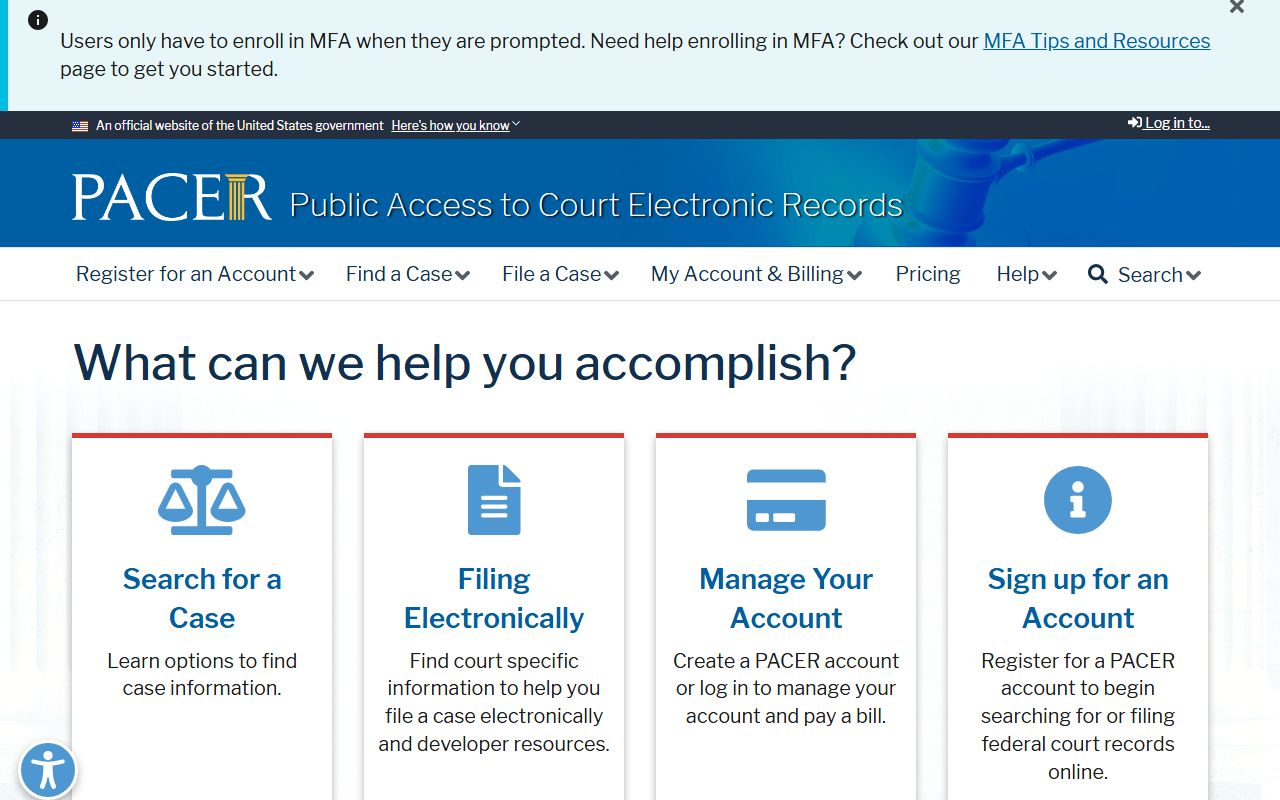
Registration is free. Most users only pay if they view or download documents beyond the quarterly $30 threshold.
Types of Bankruptcy Records in New York
New York bankruptcy records cover several types of filings. Chapter 7 is the most common. It involves liquidation of assets to pay off creditors. A trustee sells non-exempt property and uses the funds to pay debts. Most Chapter 7 cases for individuals wrap up in three to six months. The debtor gets a discharge that wipes out most unsecured debts. Under Section 282 of New York's Debtor and Creditor Law, filers who choose state exemptions can protect certain assets like a motor vehicle up to $4,000 in value and their homestead.
Chapter 13 cases work differently. The debtor keeps their property but pays creditors through a three-to-five-year repayment plan. These records show the proposed plan, payment schedule, and any modifications the court approves. Chapter 13 is for individuals with regular income who want to catch up on a mortgage or car loan while getting relief on other debts.
A bankruptcy case file in New York typically contains:
- The petition, schedules of assets and liabilities, and statement of financial affairs
- Proof of claim forms from creditors
- The trustee's report and any objections
- Court orders including the automatic stay and discharge
- Meeting of creditors (341 meeting) records
Chapter 11 filings involve business reorganization. These tend to be more complex with plans of reorganization, disclosure statements, and creditor voting records. Large corporate bankruptcies in Manhattan draw national attention. The Southern District handles many high-profile Chapter 11 cases.
The Southern District of New York Bankruptcy Court is one of the busiest in the nation and handles cases from eight counties.
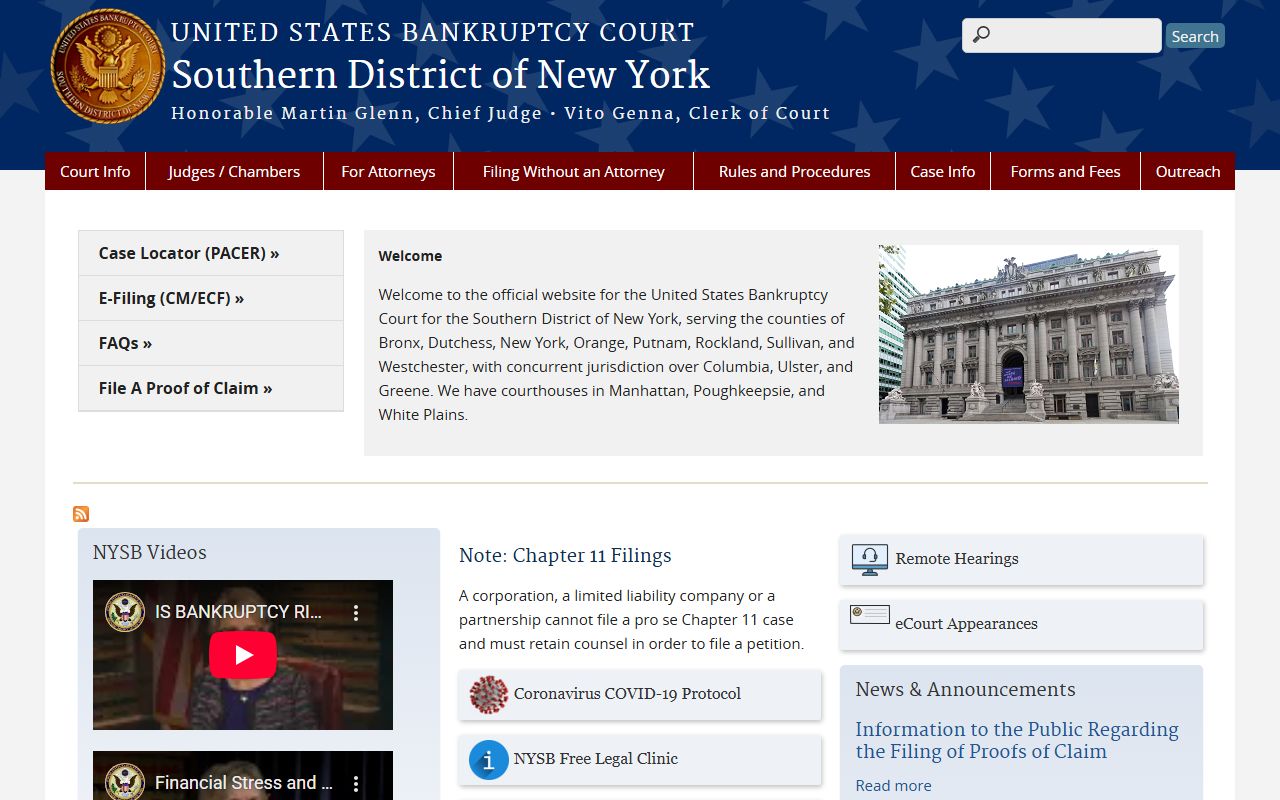
Public access terminals at the Manhattan, White Plains, and Poughkeepsie courthouses let you look up case information for free.
New York Bankruptcy Records Fees and Costs
Searching for bankruptcy records in New York comes with some costs. PACER charges $0.10 per page for viewing or downloading documents. The cap is $3.00 per document, so anything over 30 pages still costs just $3.00. Audio files of court proceedings cost $2.40 each. If your total charges for the quarter stay under $30, the whole amount gets waived. Case searches on PACER are free. You only pay when you open a document or docket report.
At the courthouse, copies run $0.50 per page for documents pulled from the electronic case file system. That applies to cases filed on or after June 16, 2003. In the Western District's Buffalo office, you need exact change, a money order, or certified check. The Rochester office does not accept cash at all. Only money orders or certified checks work there.
Older case files may be stored at the National Archives and Records Administration. Getting copies from NARA takes more time and costs more. An entire case file costs $90. Preselected documents run $35. A docket sheet is $35. Certification adds $15 on top of any request. You need to get the transfer number, location number, and box number from the bankruptcy court before NARA can pull the file.
Note: Fees can change. Check the specific court's website or call the Clerk's Office to confirm current costs before you request copies.
The eCourts Case Lookup system provides case tracking for New York state court cases and can help locate related civil actions tied to bankruptcy matters.
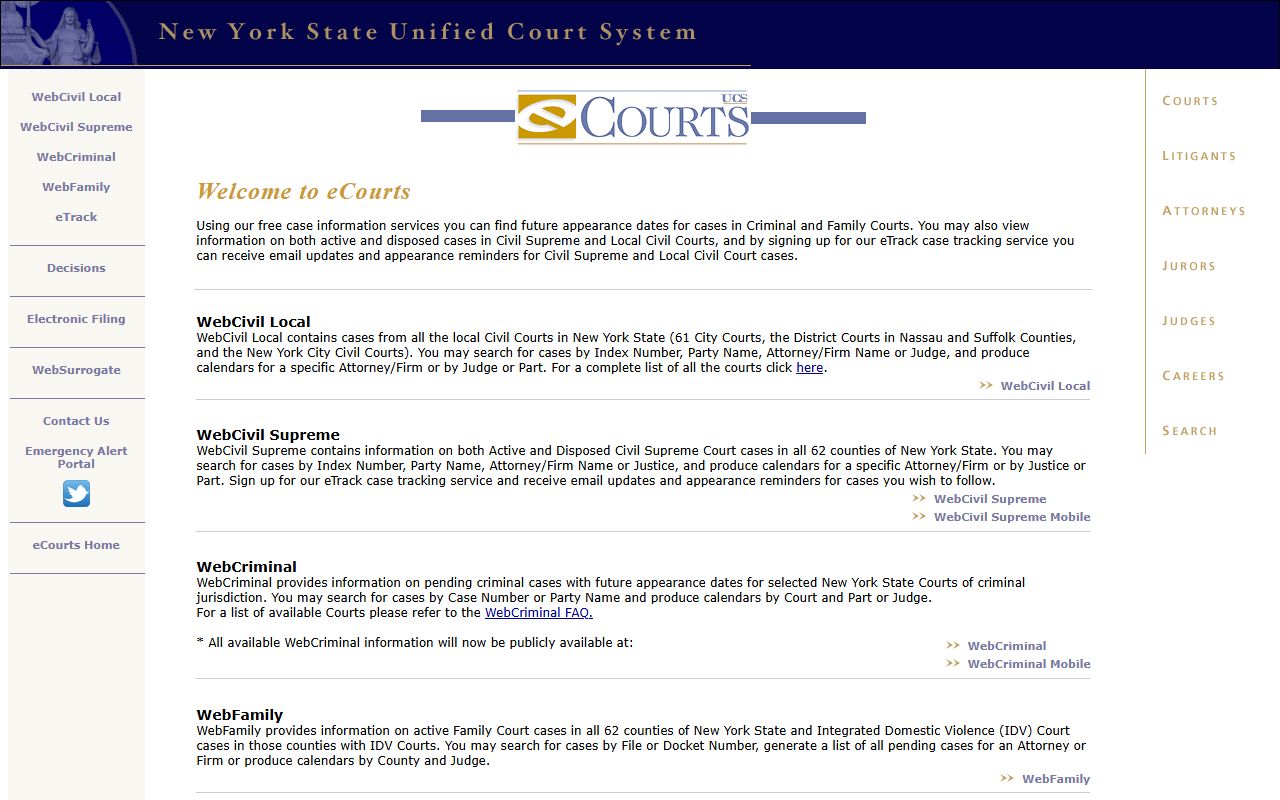
While bankruptcy itself is federal, state court judgments and liens often play a role in the bankruptcy process.
New York Bankruptcy Exemptions
When someone files for bankruptcy in New York, they can protect certain property from creditors. Under federal law at 11 U.S.C. Section 522(b), a debtor picks either federal exemptions or state exemptions. They cannot mix and match. To use New York State exemptions, the debtor must have lived in New York for the 730 days right before filing.
New York's exemption amounts vary by county. The homestead exemption protects equity in a primary residence. In the five boroughs plus Nassau, Suffolk, Rockland, Westchester, and Putnam counties, the limit is up to $204,825. In Dutchess, Albany, Columbia, Orange, Saratoga, and Ulster counties, it goes up to $170,700. All other counties have a cap of $102,400. These amounts come from the New York Department of Financial Services and update every three years.
Other key exemptions include a motor vehicle up to $5,500 above liens, or $13,625 if equipped for a disabled debtor. Personal property like clothing, furniture, a refrigerator, TV, computer, and cell phone fall under aggregate limits. Retirement accounts are exempt up to $1,711,975 per person for cases filed between April 2025 and March 2028. Social Security, unemployment benefits, veterans' benefits, and workers' compensation are fully exempt.
Section 282 of the Debtor and Creditor Law on the New York State Senate website lays out the specific exemptions that bankruptcy filers in New York can claim.
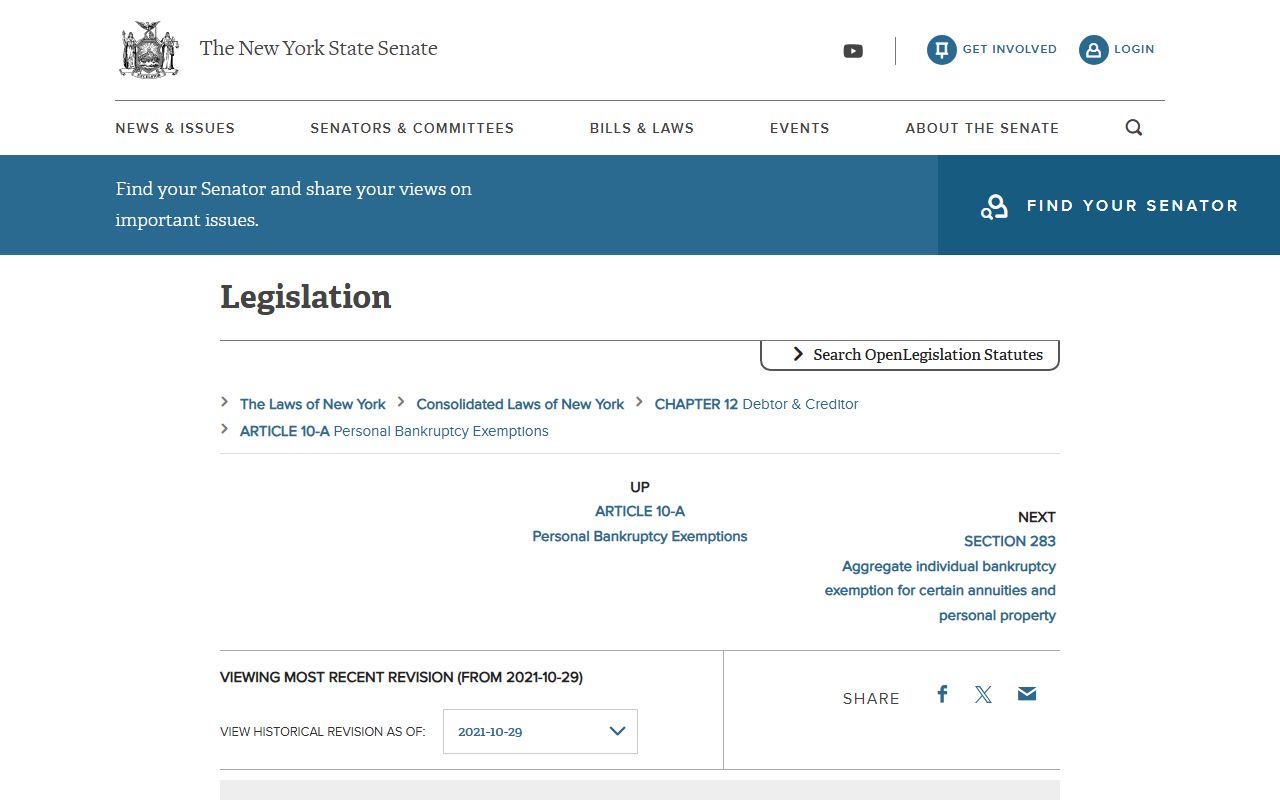
Debtors must choose between state and federal exemptions on Schedule C of their bankruptcy petition.
How to Get Copies of New York Bankruptcy Records
The fastest way to get copies is through PACER. Log in, find the case, and download the documents you need. You can print them right away. PACER has most records from the past 15 years or more. Each district court also maintains its own CM/ECF system where attorneys file documents. Parties in a case get one free electronic copy of everything filed.
You can also visit any of the eight courthouse locations in person. The Clerk's Office at each courthouse can pull up case files and make copies. Bring the case number if you have it. Staff can also search by debtor name. Public access terminals at the courthouse let you look through dockets at no charge.
For cases filed before June 16, 2003 that have been closed more than two years, the files may have been sent to NARA. The bankruptcy court can give you the tracking information you need to request the file from the National Archives. Use NARA Form 90 to submit your request. Turnaround varies but plan for a few weeks.
The National Archives stores older New York bankruptcy records that courts have transferred out of active storage.
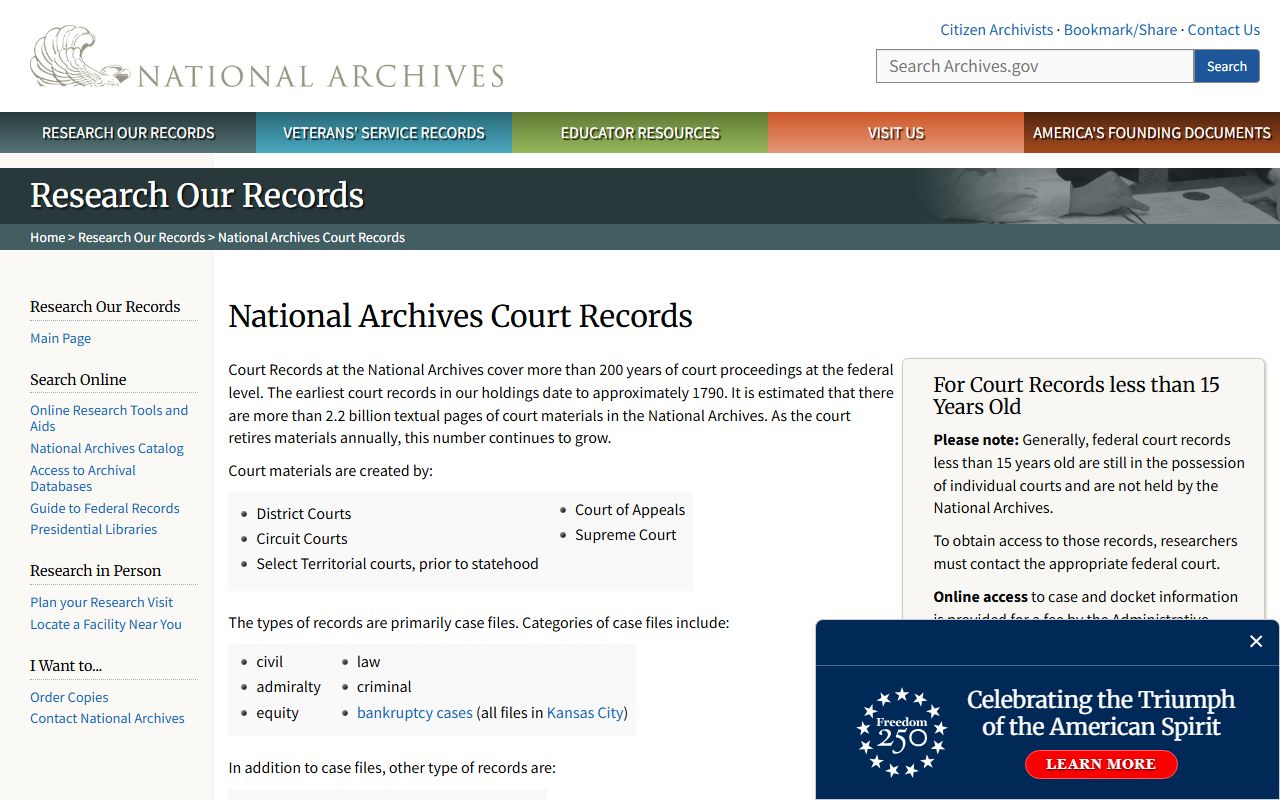
You need case identifiers from the originating bankruptcy court before NARA can locate your file.
New York State Court Records and Bankruptcy
Bankruptcy cases are federal, but state court records often matter. Judgments, liens, and foreclosure actions filed in New York Supreme Court can show up in a bankruptcy case. The New York State Unified Court System provides public access to court records through several online tools. The eCourts system covers case tracking for Supreme Court. WebCivil Local handles lower civil courts. Each county clerk serves as the clerk of Supreme and County Courts and maintains those records.
The eCourts portal lets you search for civil case information across New York state courts. You can track cases and set up email alerts. For cases filed electronically, the NYSCEF system at nycourts.gov/efile allows guest searches of Supreme Court documents without an account. Criminal history searches through the court system cost $95 per search.
County clerks across New York maintain land records, judgment dockets, and lien filings that may relate to a bankruptcy case. Many counties offer online search through the SearchIQS platform or their own portals. Copy fees at county clerk offices are typically $0.25 to $0.65 per page, with certified copies running $5 to $8 per document.
The New York State court records page explains how to access court files from the state system, which can supplement federal bankruptcy record searches.
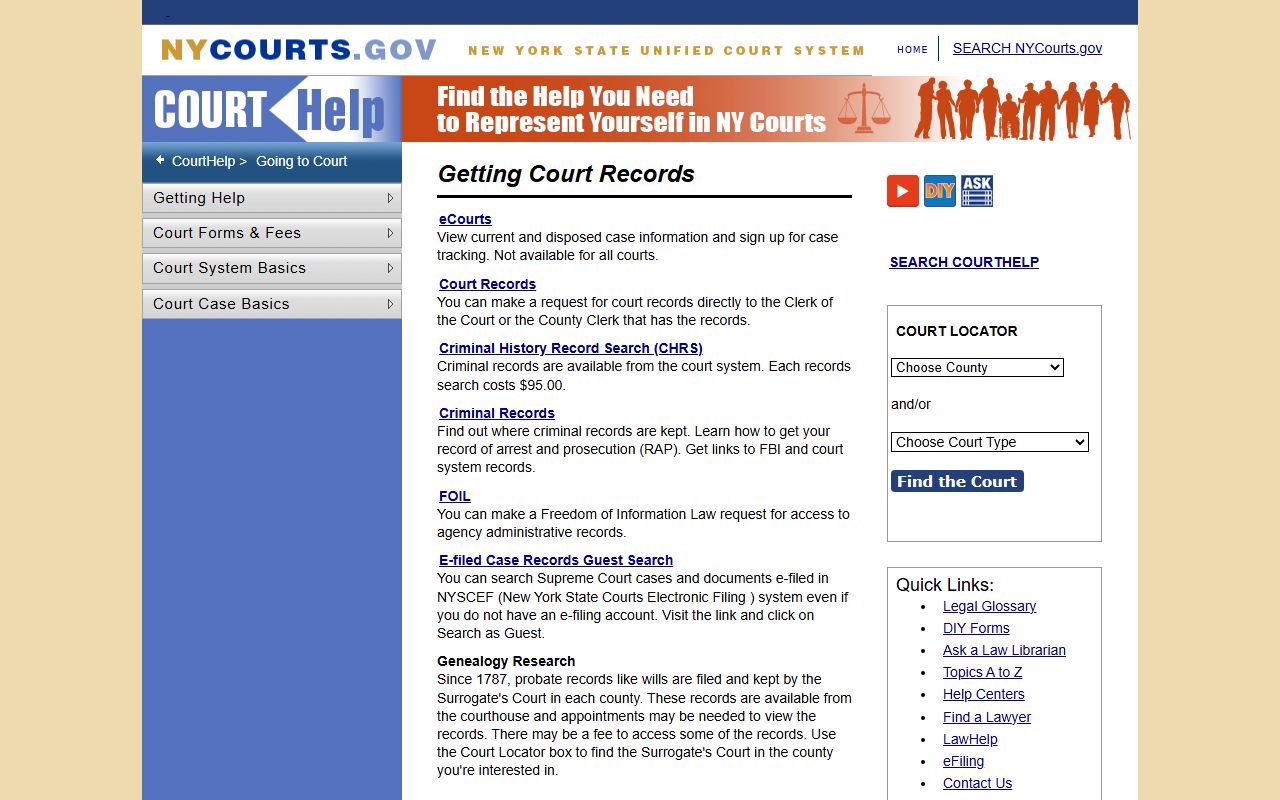
County clerk offices across the state serve as the local access point for Supreme Court and County Court files.
Bankruptcy Oversight in New York
The U.S. Trustee Program watches over bankruptcy cases in New York. It is part of the Department of Justice. The U.S. Trustee for Region 2 covers all four New York districts. The program reviews petitions for fraud or abuse, appoints and supervises Chapter 7 and Chapter 13 trustees, and conducts the meeting of creditors in most cases. Before filing, individual debtors must complete credit counseling from an approved agency. Before getting a discharge, they need to finish a debtor education course. The U.S. Trustee Program website lists approved providers for each region.
Attorneys who file cases in New York must use the CM/ECF electronic filing system. Pro se debtors, people filing without a lawyer, can file paper petitions at any Clerk's Office during business hours. All filings must follow Fed. R. Bankr. P. 9037, which requires redacting Social Security numbers, dates of birth, names of minor children, and financial account numbers from public documents.
The Northern District Bankruptcy Court serves 32 upstate counties from offices in Albany, Syracuse, and Utica.
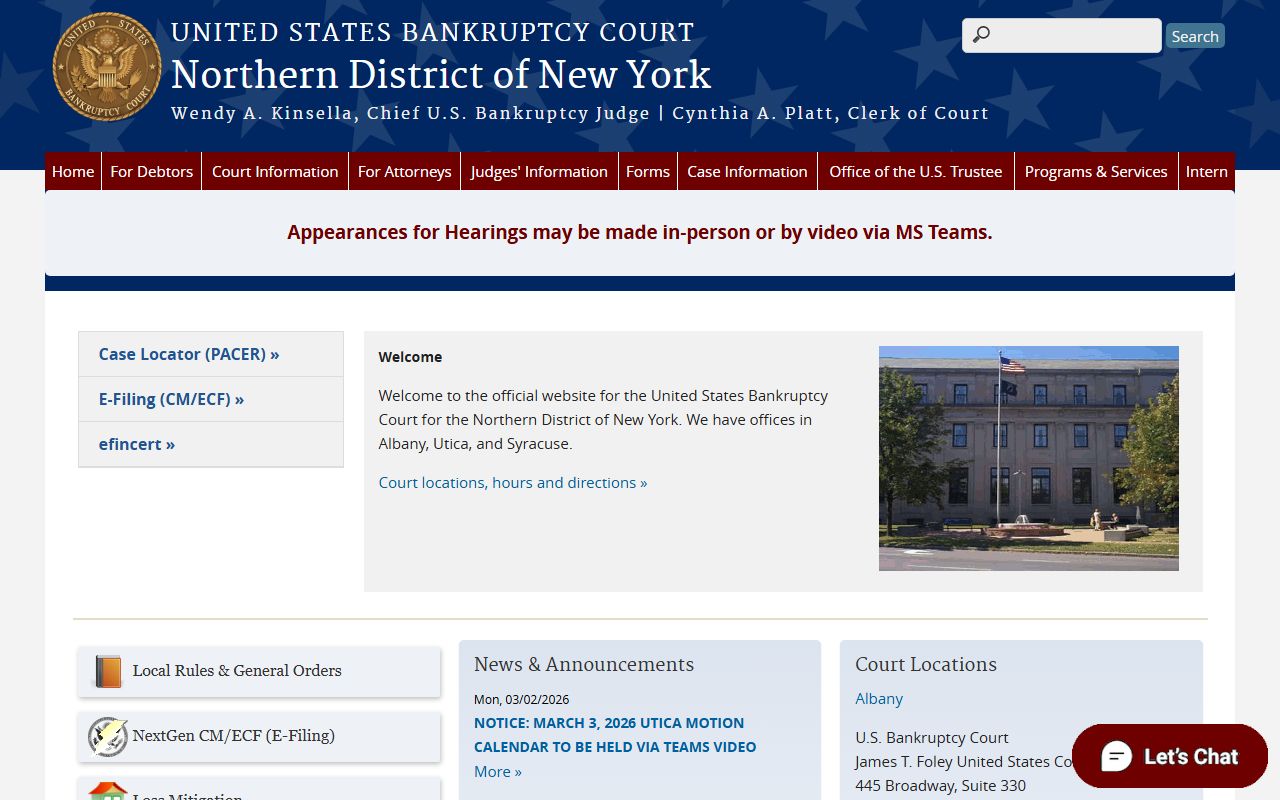
Case information in the Northern District dates back to January 1, 1986, with electronic documents available from December 30, 2002 forward.
The Western District handles bankruptcy filings from 17 counties in western New York, with courthouses in Buffalo and Rochester.
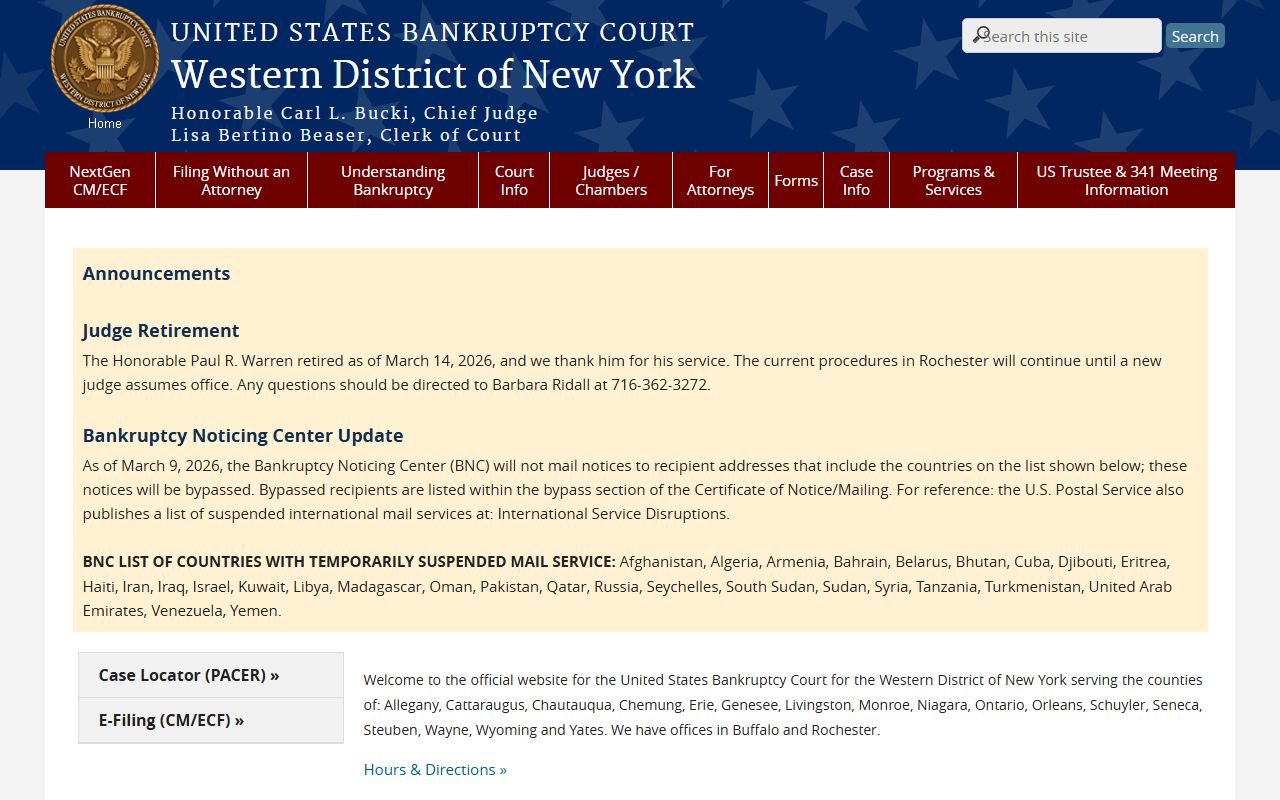
Public hours run from 8:00 AM to 4:30 PM, Monday through Friday, at both locations.
Browse New York Bankruptcy Records by County
Each of New York's 62 counties falls under one of four federal bankruptcy districts. Pick a county below to find which court handles filings, local contact info, and resources for bankruptcy records in that area.
Bankruptcy Records in Major New York Cities
Residents of major cities file bankruptcy at the federal court in their district. Pick a city below to find out where to go for bankruptcy records in that area.